
Business: Uganda steps up efforts on ICGLR mineral certification, faces challenges in implementation
________________ Many artisanal and small-scale miners of tin, tantalum, tungsten and gold (3T and G) in Uganda remain largely unaware of the International Conference on the Great Lakes Region (ICGLR) Regional...
________________
Many artisanal and small-scale miners of tin, tantalum, tungsten and gold (3T and G) in Uganda remain largely unaware of the International Conference on the Great Lakes Region (ICGLR) Regional Certification Mechanism (RCM), despite its potential to benefit them.
Uganda is making progress in rolling out the ICGLR RCM. This system is designed to stop minerals from fueling conflicts while boosting their market value, increasing government revenues, and promoting sustainable development at home and across the region.
The certification covers 3T+G, ensuring that minerals are traced from the mine to export. By improving transparency and accountability, it helps small-scale miners access regulated international markets more fairly. Uganda is now the fifth member state to adopt this system."
Agnes Alaba, the commissioner in the department of geological survey and mines, ministry of energy and mineral development. 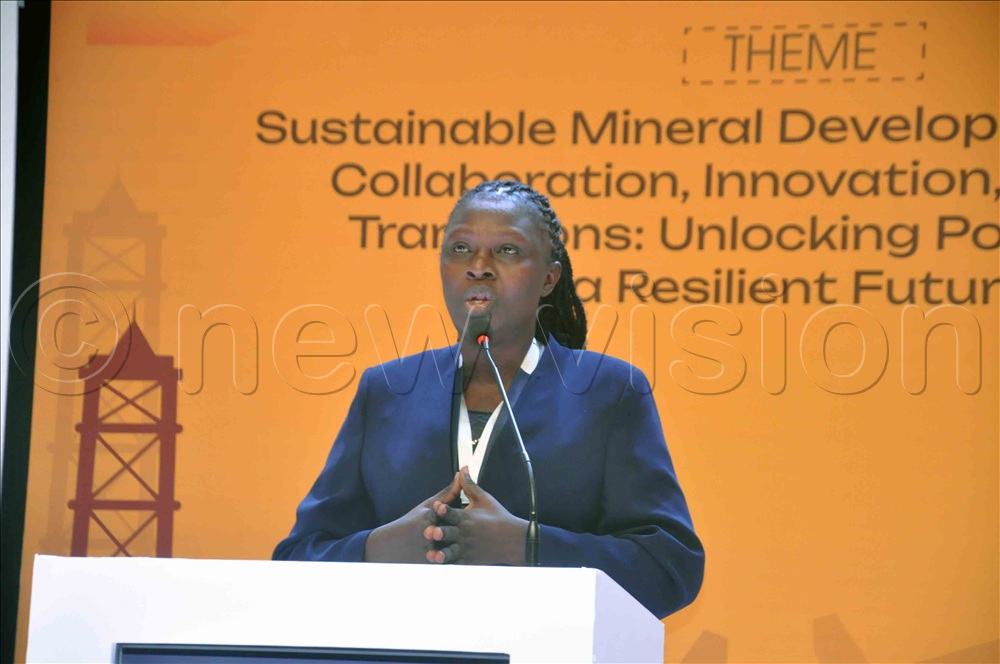
ASM directly employs between 400,000 and 600,000 people, while an estimated 2 million others benefit indirectly. Gold mining forms the backbone of this segment, making ASM the largest component of Uganda’s mining industry. To unlock its full potential, the government is prioritising investment attraction and regulatory reforms aimed at boosting the sector’s overall contribution to GDP.
Miners’ limited awareness
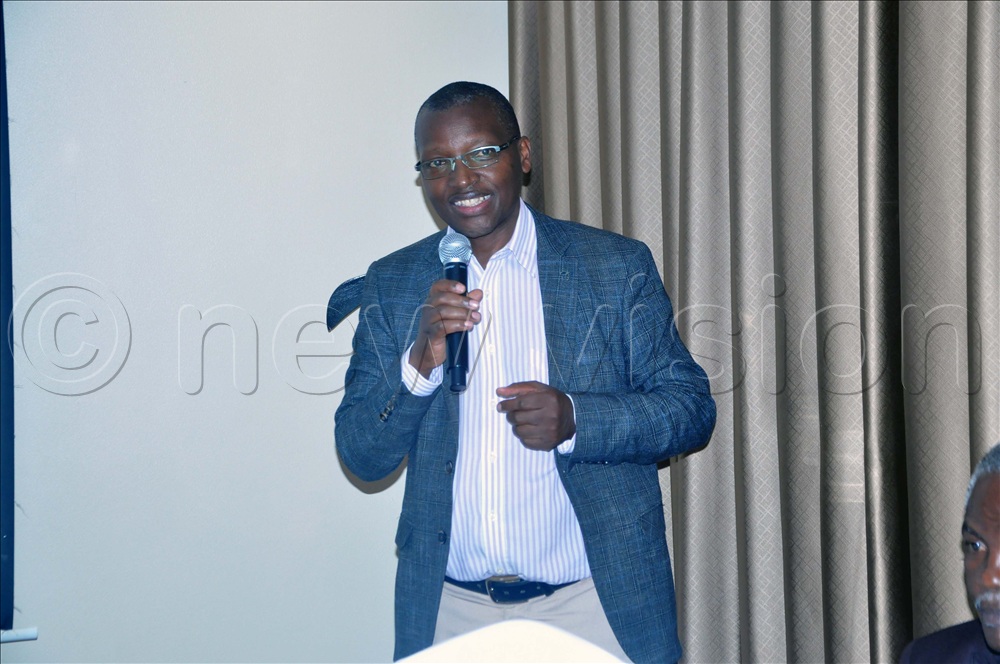
Kedi (Right) and Kutesa (Left) discussing during a meeting on mining at the Kabira Country Club, Kampala. 
Woodcross Resources, based in Mbarara District, is currently Uganda’s only certified tin exporter, producing refined tin with 99.9% purity for the European market. After the government banned the export of unprocessed minerals in 2019, the company invested in establishing a modern tin processing plant, which was officially launched in April 2024.
According to Alaba, inspections are being carried out to ensure mining sites remain free of child labor, armed groups, and conflict-linked practices.
She added that the government is recruiting at least a dozen mine inspectors to boost oversight and ensure more thorough inspections across the country’s mining sector. For gold, Uganda is building a traceability system modeled on Tanzania’s and plans to establish gold buying centers in Busia, Kasanda, Buhweju, Kampala and Entebbe.
ICGLR oversight and concerns
“Certification begins with regular monitoring of mine sites,” said Gerard Nayuburundi, Coordinator of the ICGLR Technical Unit on Natural Resources.
“Uganda has about 52 tin mine sites that should be inspected annually, but inspections are not always conducted on time.”
He added that Uganda’s tin tracking system, currently managed by a private firm, does not fully comply with ICGLR requirements, leaving a gap between production and the first point of sale.
Gold presents an even bigger challenge.
“Its high value and low volume make it especially vulnerable to smuggling. Without a robust traceability system, illegal gold can easily slip into formal supply chains,” Nayuburundi warned.
ICGLR is now drafting regional guidelines for licensing gold-tracking systems.
Private sector perspectives
For businesses, certification has brought both opportunities and burdens.
Kwesi Kutesa, of Woodcross Resources, said the company obtained an export permit for refined tin after engaging a third-party auditor from the DRC, since Uganda lacks local capacity. The audit, approved by the ICGLR Secretariat in Burundi, flagged issues such as worker safety.
For others, cost is the main barrier. Derrick Rukare, company secretary of Wagagai Mining (U) Ltd, described the process as “expensive and complex.” Rukare explained: “Independent auditors are required, and most are not based in Uganda. Costs for travel and accommodation make certification very costly.”
He urged investment in training local firms to carry out audits.
He added that they were waiting for more information on the mechanism.
Vincent Kedi, the assistant commissioner licensisng and administration of the directorate of geological survey and mines, said the certification process for tin is progressing, with EU and GIZ support helping to design chain-of-custody systems.
Some industry players question its immediate relevance. Alan Agume, Chairman of the Miners Forum Uganda, argued that certification lacks impact without stronger export volumes and wider recognition by smelters and refineries.
Frank Mugyenyi, the executive director of the Minerals African Development Institution (MADI), countered that the mechanism is essential for credibility in global markets.
“The RCM’s primary aim is to prevent minerals from fueling conflicts, while ensuring responsible production. European buyers demand certification, unlike markets such as Dubai.”
Uganda is building a more transparent mineral sector by adopting certification, traceability systems and stronger legal frameworks, aimed at opening new markets, boosting investor confidence and promoting peace and responsible mining in the Great Lakes region.

